
Light the places people walk first: steps, grade changes and the path to the door or gate. Then pick a few things worth looking at, such as a tree, a stone wall or the patio, and leave the rest dark. Use warm, shielded, low-voltage LED fixtures aimed at your own landscape, so the light lands on the yard and not in the sky or the neighbor's windows.
Start with where people walk
By the middle of November the sun is down before 5 p.m. along the Front Range, and it stays that way for months. Most trips across the yard, to the grill, the gate, the trash cans or the car, now happen in the dark, often on snow or ice.
So safety comes first. Every step, every change in height and every turn in a path should be visible. That takes less light than most people expect. A low fixture that puts a soft pool of light on the tread does more than a bright floodlight on the wall behind you, which mostly throws your own shadow across the step.
Then light what is worth looking at
Once the walking routes are covered, the rest is about the view, from the patio and from inside the house. Each type of fixture does a different job, and most yards use three or four of them.
- Path lights: low fixtures that mark the way without lighting up the whole yard.
- Step and wall lights: built into steps, seat walls and caps so every change in height shows.
- Uplights: set at the base of a tree, a column or stonework to show its shape.
- Downlights: mounted in a tree or under an eave for a soft, natural wash, a little like moonlight.
- Patio and kitchen lighting: task and ambient light where you cook, eat and sit.
Evergreens, boulders and stone walls are the best subjects in a Colorado yard, because they look the same in January as they do in July. The craft is restraint. A few well-placed fixtures look better than a row of bright ones, and the dark areas between them are what give the yard depth at night.
Keep the light on your own property
Glare is the most common mistake in outdoor lighting, and it is the one neighbors notice. Three habits prevent it.
- Shield the source. You should see what the light lands on, not the bulb itself.
- Aim at your landscape. Not at the sky, the street or the property line.
- Choose warm white over cool blue-white. It is easier on the eyes and looks better on stone and plants.
We use warm, shielded fixtures, and we do the final aiming after dark, because that is the only way to see what the lighting really does.
What local lighting rules say
Lighting rules along the Front Range are written mostly for commercial sites and new development, but they are a good yardstick for a home, and some of them do reach residential lots.
- Colorado Springs: the exterior lighting standards in the city's development code apply mainly to projects that need a development plan, and they exempt building-mounted residential lighting. The standard they set is a sensible one for any yard: fixtures shielded so the lighting element cannot be seen from the property line, and no more than one footcandle of light at the property line.
- Unincorporated Douglas County: the zoning resolution exempts single-family lighting from most of its lighting standards. It still prohibits strobe lights, searchlights and similar upward or outward oriented lighting, and it says lighting in single-family areas should be limited to 2,400 lumens per fixture unless it is shielded.
- Towns and HOAs: towns such as Castle Rock have their own lighting rules, and many HOA covenants are stricter than the town or county. Check both before you buy fixtures.
Rules can change, so confirm the current requirement for your address. In practice, a low-voltage system that is shielded, warm and aimed at your own yard sits well inside all of them.
Let it run itself
Sunset moves by almost four hours between December and June, so a system on a plain clock timer is wrong for most of the year. Photocells and smart transformers turn the lights on at dusk whatever the season, and off at the hour you choose. Lights that go off at bedtime use less power and are easier on the neighbors and the night sky.
We size the transformer with room to add fixtures later, so the system can grow with the yard.
Adding lighting to a yard that is already built
The best time to add lighting is while the yard is being built, and it costs less then. It can be added to a finished yard too. Low-voltage cable runs through beds and under lawn with very little disturbance. Getting under an existing patio or walk takes more work, which is why we put sleeves under the walks on every new build.
An in-person assessment for lighting is most useful at dusk, when we can see how you use the yard at night and what deserves attention.
Common questions
Can landscape lighting be installed in winter?
Yes. Lighting is mostly shallow trenching and setting fixtures, and it goes ahead whenever the ground can be dug. Winter is also when you notice where the yard is darkest.
Will landscape lighting raise my electric bill much?
Very little. A full LED landscape system typically uses less power than a couple of old indoor light bulbs.
Why low-voltage LED instead of regular outdoor fixtures?
It is safe around people, pets and water, it uses very little power, and LED fixtures last for years without bulb changes. The cable can be buried shallow and moved later if the yard changes.
Will my lights bother the neighbors?
Not when the system is designed well. Shielded fixtures aimed at your own landscape keep glare off the property line. If you can see a bare bulb from the neighbor's side, that fixture needs a shield or a new angle.
Ready when you are
Have a project like this in mind?
Tell us about it. A member of our team will reach out to schedule your in-person assessment.
Keep reading
More from the blog.
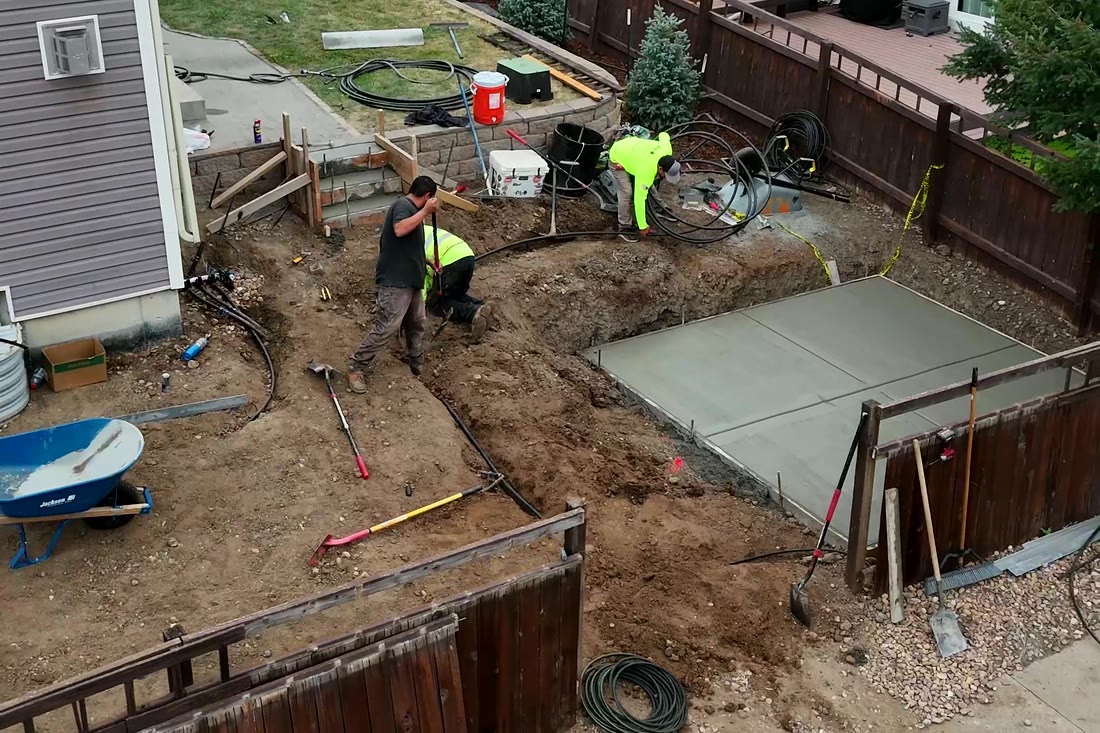
Planning and Budget
Can You Build a Patio or Retaining Wall in Winter in Colorado?
Yes. Along the Front Range, patios, walls, concrete and drainage can be built through the winter, as long as nothing goes on frozen ground. Here is what works and what waits.
Read article →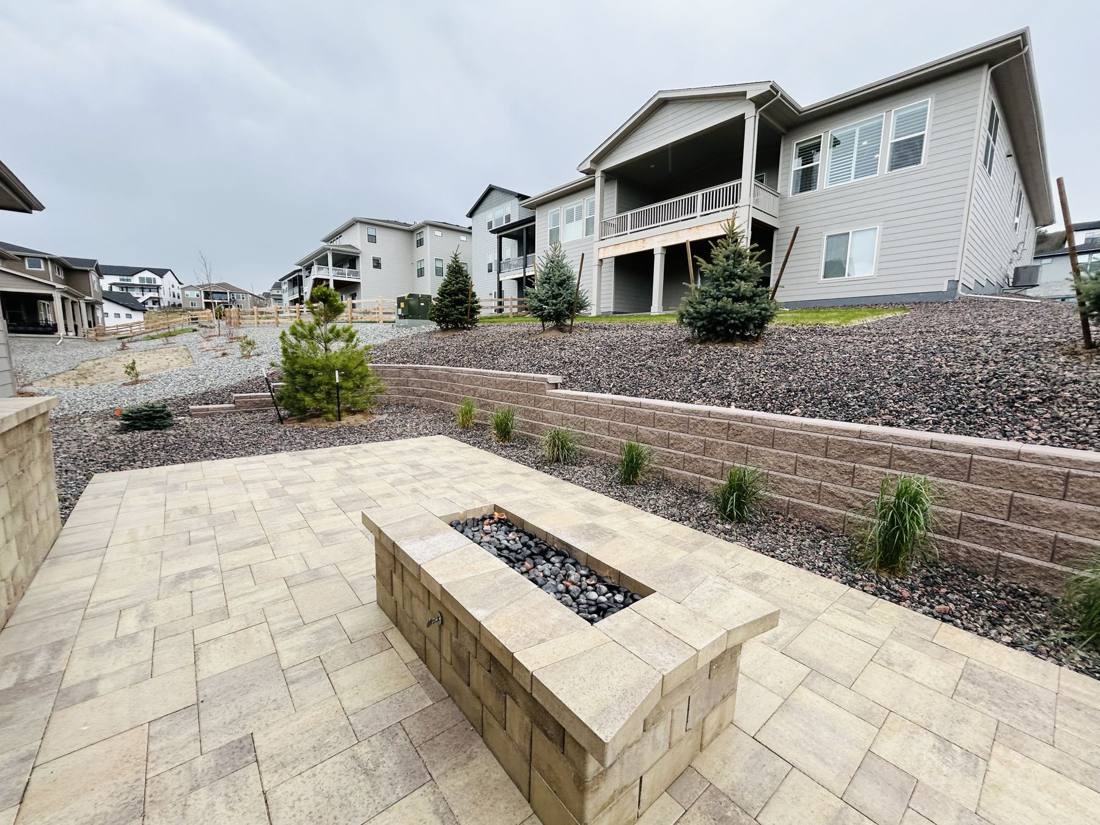
Hardscaping
Why Paver Patios Sink and Heave in Colorado, and How to Prevent It
Paver patios fail in Colorado when water gets trapped in the base and freezes. Here is what causes sinking and heaving, and the base that prevents it.
Read article →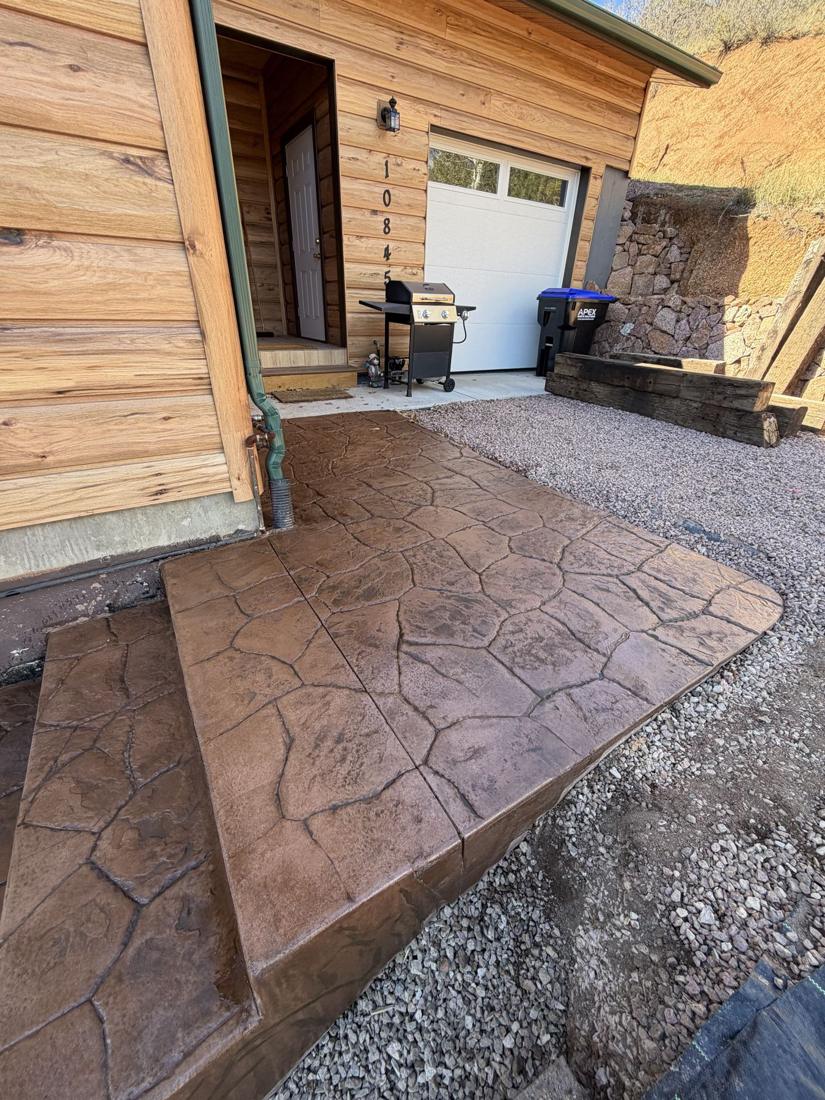
Planning and Budget
Pavers or Concrete for a Colorado Patio: How to Choose
Pavers and concrete both work for Colorado patios when they are built correctly. Compare cost, repair, looks and maintenance to choose the right one.
Read article →