
Both hold up in Colorado when they are built correctly. Concrete usually costs less up front and gives a clean, continuous surface. Pavers cost more to install, but they flex with freeze-thaw movement and can be lifted and repaired piece by piece. The right choice depends on your budget, the look you want and how you feel about future repairs.
Where concrete wins
- Lower cost per square foot in most cases.
- A smooth surface that is easy to shovel and easy to roll furniture across.
- Broom, stamped and colored finishes to suit the house.
- A good fit for driveways, walks and equipment pads.
We pour a 4,000 psi mix at 4 inches thick on a compacted base, reinforce it for the job, and cut or tool control joints so cracks follow the joints. We prefer integral color, and we recommend sealing all concrete.
Where pavers win
- Individual units move slightly with the ground instead of cracking.
- A damaged or stained area can be replaced without redoing the patio.
- Utilities under the patio can be reached later by lifting pavers.
- More patterns, textures and borders to work with.
What matters more than the material
Either surface will fail on bad ground. Drainage, a properly prepared base and correct slope away from the house matter more than which material sits on top. Ask any contractor how they prepare the base before you compare prices.
Common questions
Will concrete crack in Colorado?
All concrete cracks to some degree. Control joints are there so it cracks in straight, planned lines. Good base preparation, reinforcement and sealing keep cracks small and the slab level.
Can I mix both?
Yes. A concrete patio with a paver border, or a paver patio with concrete steps and walks, is common and can balance budget and looks.
Ready when you are
Have a project like this in mind?
Tell us about it. A member of our team will reach out to schedule your in-person assessment.
Keep reading
More from the blog.
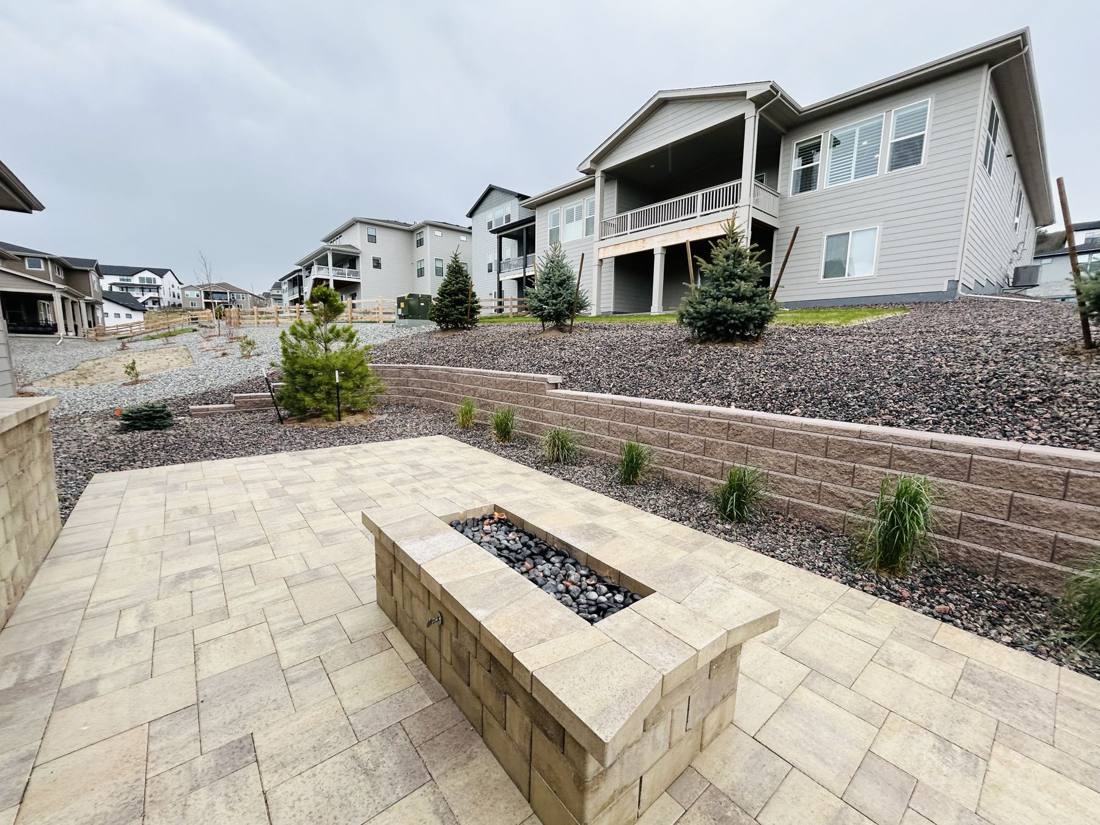
Hardscaping
Why Paver Patios Sink and Heave in Colorado, and How to Prevent It
Paver patios fail in Colorado when water gets trapped in the base and freezes. Here is what causes sinking and heaving, and the base that prevents it.
Read article →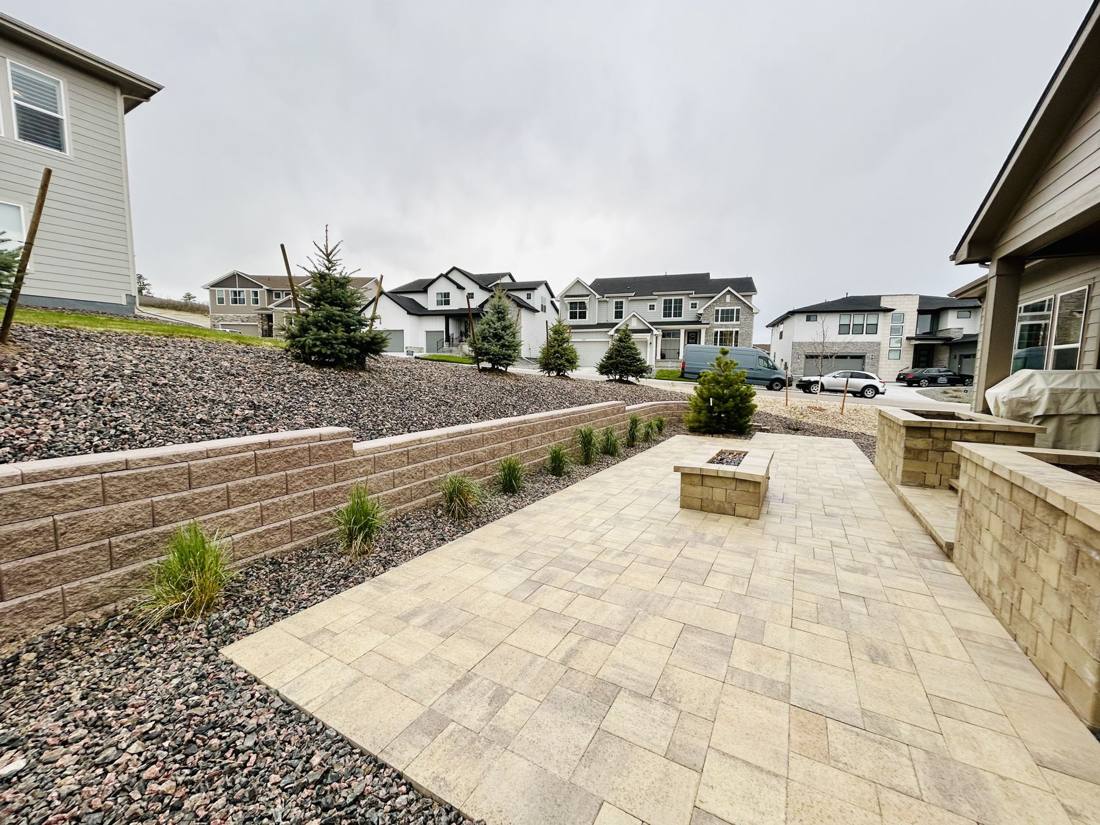
Permits and Rules
Do I Need a Permit for a Retaining Wall in Colorado Springs?
In the Pikes Peak region, retaining walls over 4 feet measured from the bottom of the footing, or walls holding extra load, need engineering and a permit.
Read article →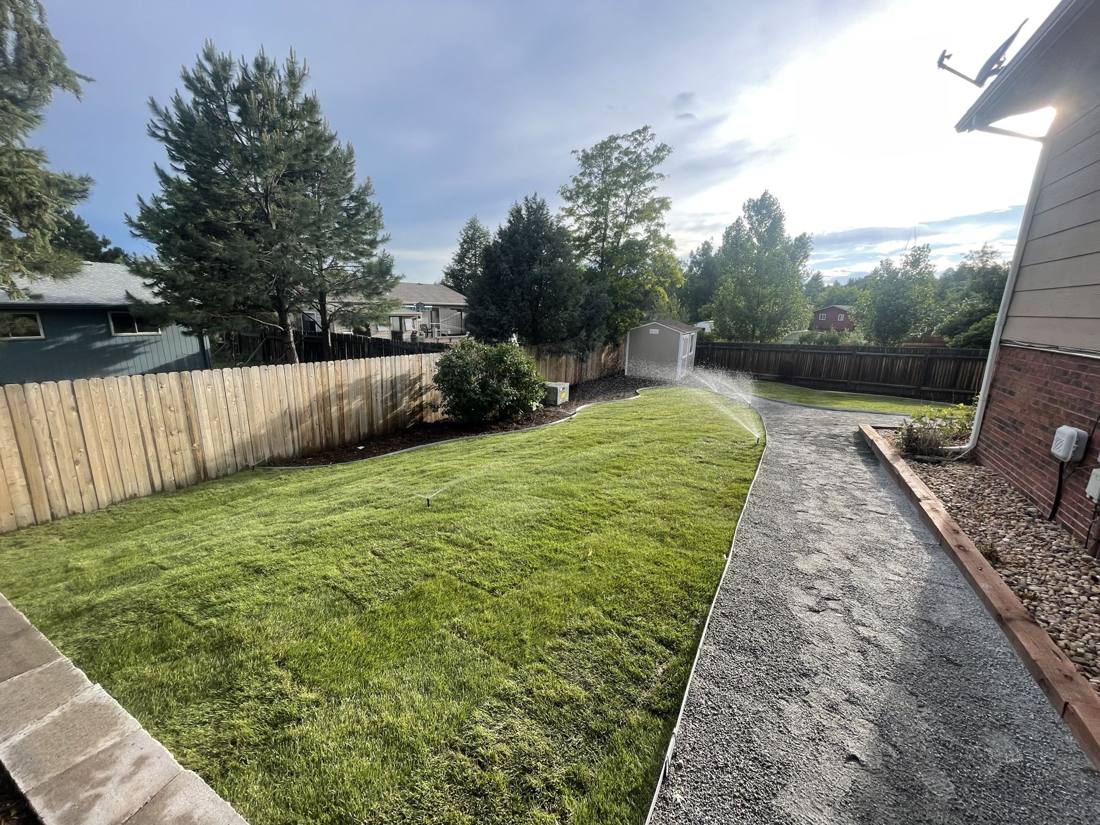
Lawn and Plant Care
How to Water New Sod Under Colorado Springs Watering Rules
New sod needs water several times a day, which is more than Colorado Springs normally allows. Here is how the establishment permit works and a week-by-week schedule.
Read article →