
Most paver patios that sink or heave in Colorado were built on a base that holds water. When that water freezes it expands and lifts the pavers, and when it thaws the base settles unevenly. The fix is a base that drains: clean crushed stone with no fines, compacted in layers, with solid edge restraint.
What actually goes wrong
Along the Front Range the ground can freeze and thaw dozens of times in a single winter. Every cycle works on any water sitting under the patio. A traditional base of road base and sand is dense and slow to drain, so it stays wet, and wet material moves when it freezes.
- Dips and low spots where the base settled or washed out.
- Raised edges and uneven joints after winter, from frost heave.
- Pavers creeping outward because the edge restraint let go.
- Weeds and ants in the joints once the joint sand is gone.
The base we build instead
We build every paver patio on an open-graded base. That means clean, angular crushed stone with the fine particles washed out, so water passes straight through instead of sitting in it.
- We excavate, work a little 3/4-inch crushed stone into the subgrade to stabilize it, and lay weed barrier fabric.
- The base is 3/4-inch clean crushed stone, placed and compacted in lifts.
- The bedding layer is 3/8-inch crushed stone, not sand.
- The edges are locked in with a concrete restraint reinforced with micro mesh.
- Joints are filled with polymeric sand and the surface is compacted.
Can a sunken patio be repaired?
Often, yes. One advantage of pavers is that they can be lifted and relaid. For a small low spot we pull the pavers, correct the base and reset them. If the whole patio was built on a poor base, a proper rebuild is usually the better investment, and the existing pavers can often be reused.
Common questions
How long should a paver patio last in Colorado?
Built on a draining base with solid edge restraint, a paver patio should last for decades. The pavers themselves rarely fail. The base is what decides how long the patio stays flat.
Is polymeric sand worth it?
Yes. It hardens in the joints, which keeps the pavers locked together and makes it much harder for weeds and ants to move in.
Ready when you are
Have a project like this in mind?
Tell us about it. A member of our team will reach out to schedule your in-person assessment.
Keep reading
More from the blog.
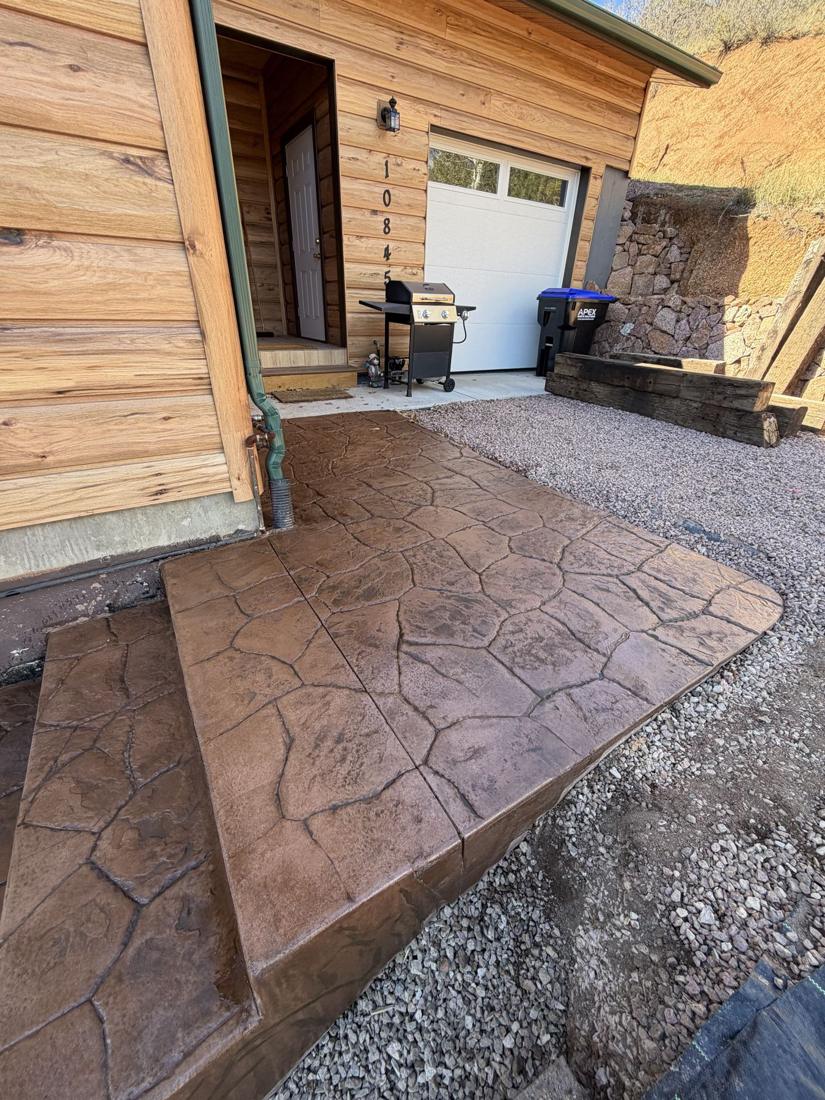
Planning and Budget
Pavers or Concrete for a Colorado Patio: How to Choose
Pavers and concrete both work for Colorado patios when they are built correctly. Compare cost, repair, looks and maintenance to choose the right one.
Read article →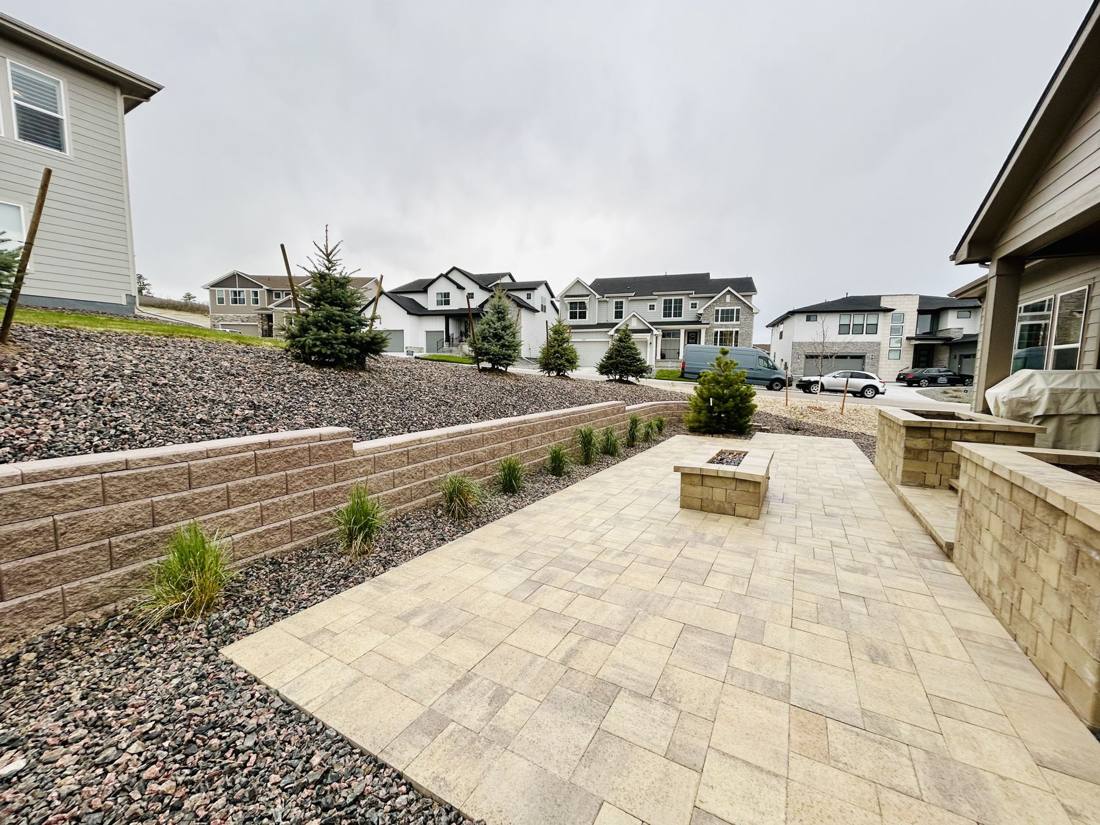
Permits and Rules
Do I Need a Permit for a Retaining Wall in Colorado Springs?
In the Pikes Peak region, retaining walls over 4 feet measured from the bottom of the footing, or walls holding extra load, need engineering and a permit.
Read article →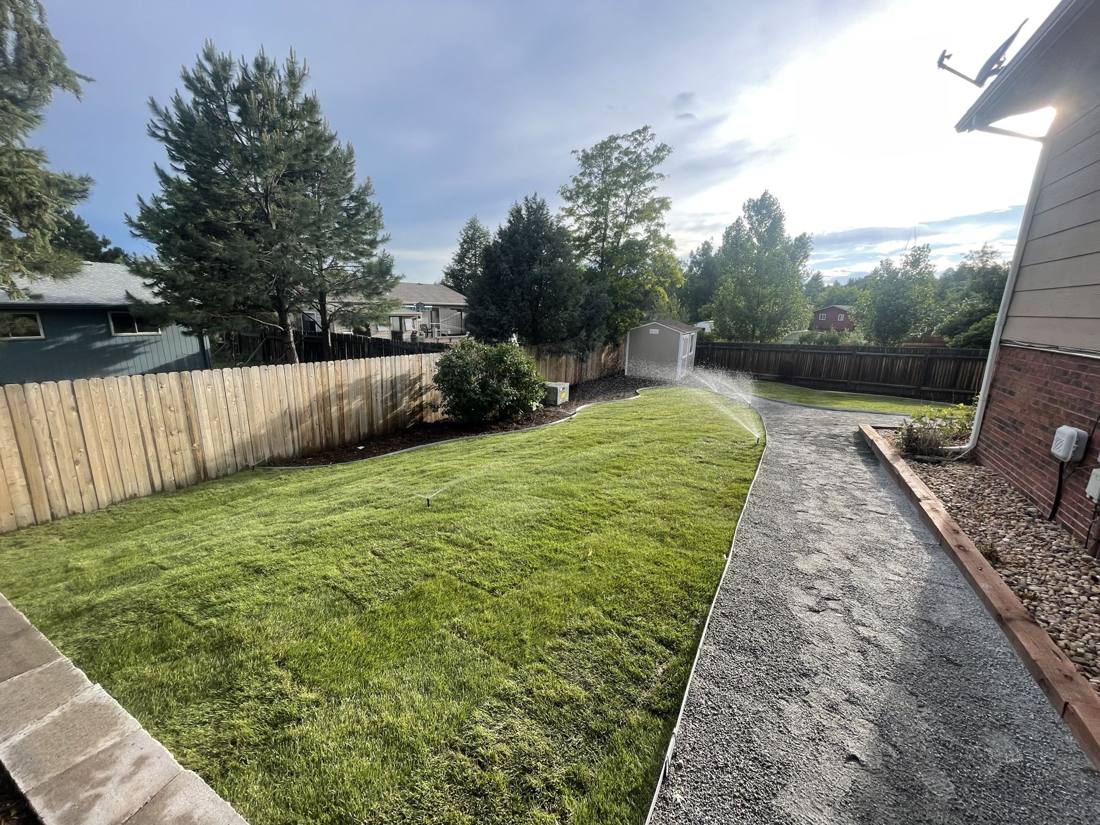
Lawn and Plant Care
How to Water New Sod Under Colorado Springs Watering Rules
New sod needs water several times a day, which is more than Colorado Springs normally allows. Here is how the establishment permit works and a week-by-week schedule.
Read article →