
A French drain is a buried, gravel-filled trench with a perforated pipe that collects water in the soil and carries it away. A dry creek bed is a shallow rock-lined channel that carries surface runoff during a storm. Soggy ground and water against a foundation usually call for a French drain. Fast-moving water from downspouts and slopes is often better handled by a dry creek bed. Many yards need both.
When a French drain is the answer
- An area stays wet for days after rain or snowmelt.
- Water collects along the foundation or seeps toward a basement.
- You need the fix to be invisible, under lawn or a planting bed.
It only works if the pipe has slope and somewhere to send the water. We plan the outlet first.
When a dry creek bed is the answer
- Downspouts or a slope send a rush of water across the yard in a storm.
- Mulch and soil keep washing out of the same spot.
- You want the drainage to look like part of the landscape.
We build ours over fabric with a mix of river rock and boulders, sized so the water slows down instead of cutting a channel.
Start with grading
Before either one, check the simple things. The ground should slope away from the house, and downspouts should discharge well clear of the foundation. Correcting those often solves more of the problem than any drain.
Common questions
Where is the water allowed to go?
To a point where it can drain safely, such as the street, a drainage easement or a part of your own yard that can absorb it. It cannot simply be sent onto a neighbor's property.
Should drainage be done before a new patio or lawn?
Yes. Drainage means trenching, and it costs far less to trench through bare ground than through finished work.
Ready when you are
Have a project like this in mind?
Tell us about it. A member of our team will reach out to schedule your in-person assessment.
Keep reading
More from the blog.
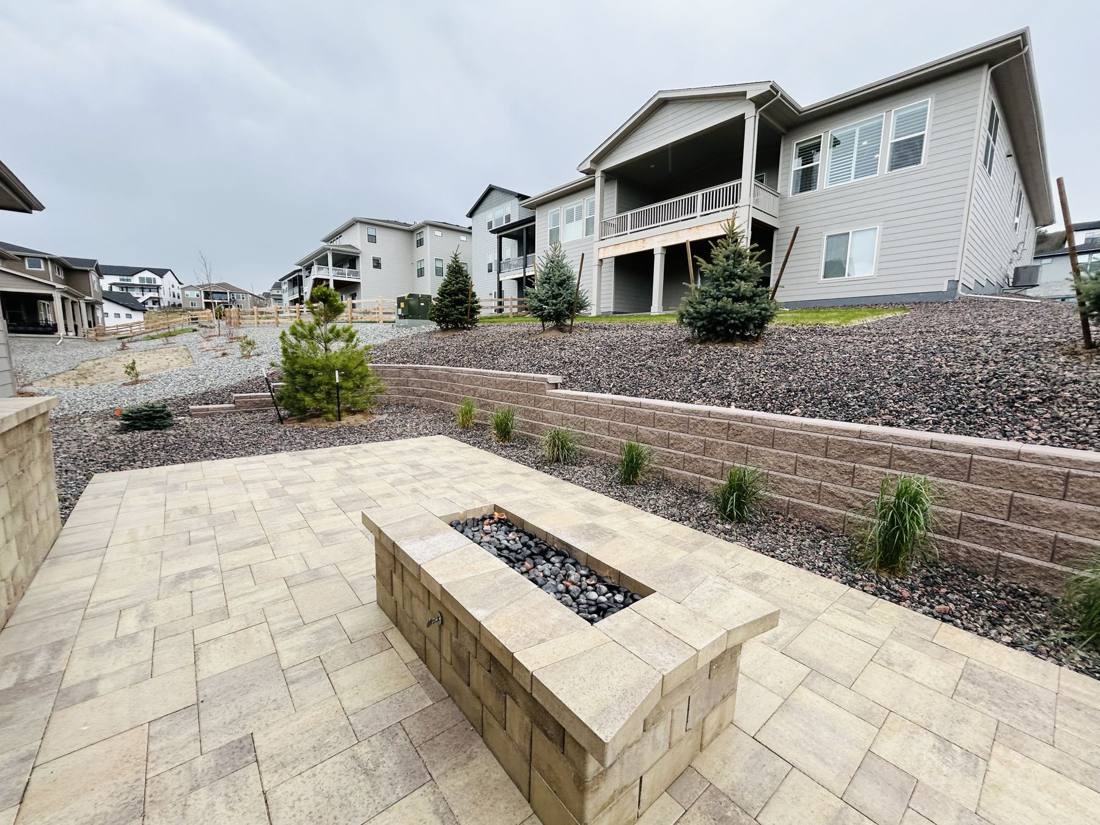
Hardscaping
Why Paver Patios Sink and Heave in Colorado, and How to Prevent It
Paver patios fail in Colorado when water gets trapped in the base and freezes. Here is what causes sinking and heaving, and the base that prevents it.
Read article →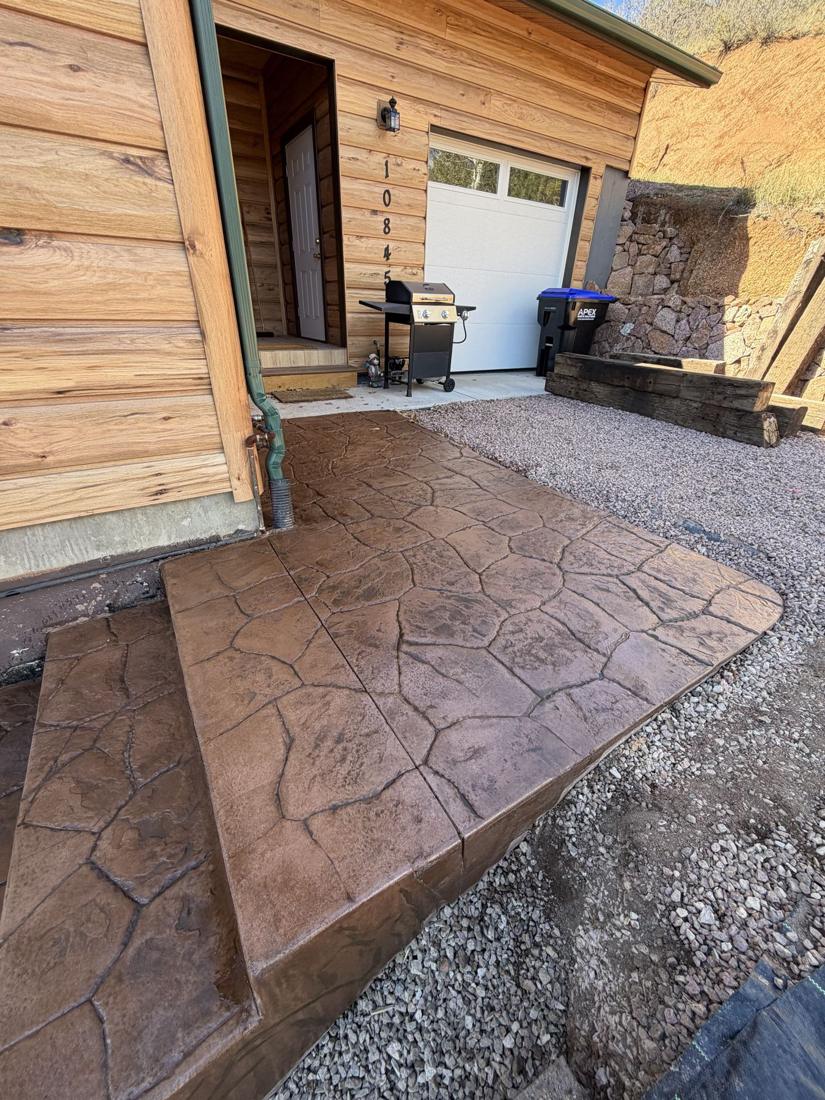
Planning and Budget
Pavers or Concrete for a Colorado Patio: How to Choose
Pavers and concrete both work for Colorado patios when they are built correctly. Compare cost, repair, looks and maintenance to choose the right one.
Read article →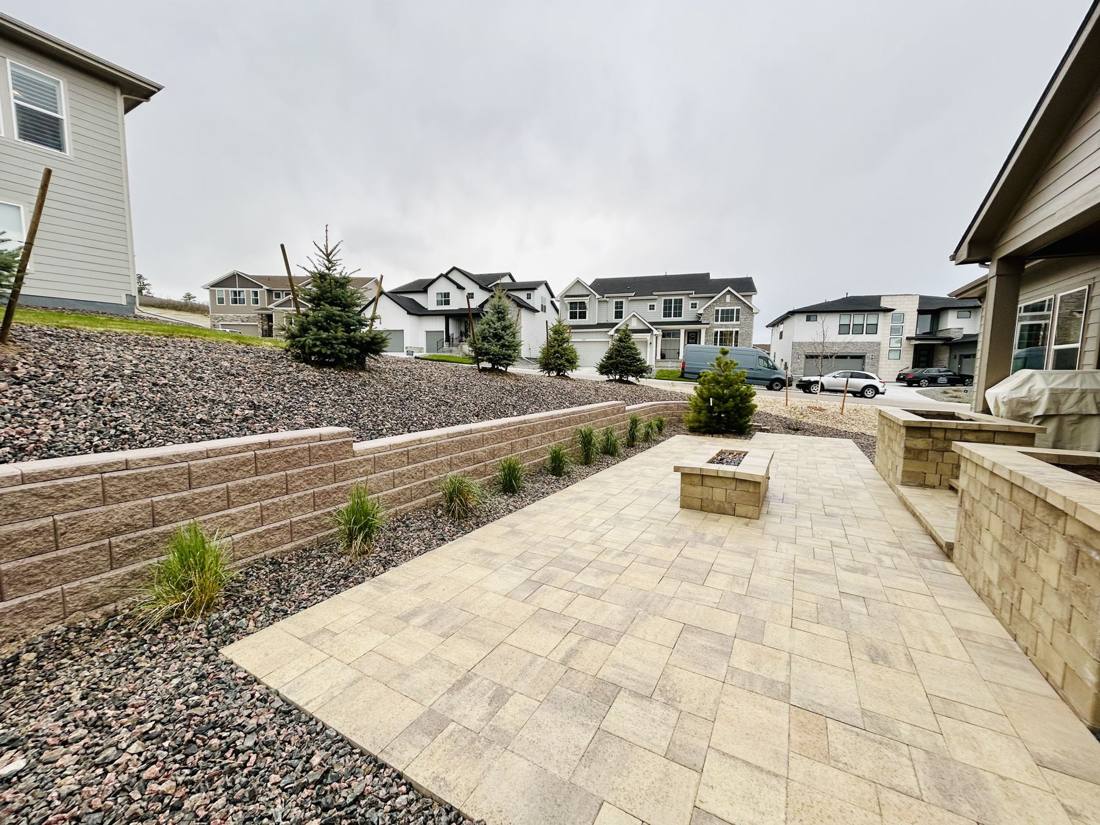
Permits and Rules
Do I Need a Permit for a Retaining Wall in Colorado Springs?
In the Pikes Peak region, retaining walls over 4 feet measured from the bottom of the footing, or walls holding extra load, need engineering and a permit.
Read article →